Thursday, September 1, 2022

The Village Awakes

The village slowly beings to shake off its slumber and come to life.

The mothers are the first to stir, leaving the warmth of straw-mattressed beds to hitch up night clothes and squat over porcelain nightjars, emptying their bladders.

Shivering in the dawn chill they lace coarse woollen dresses over petticoats and descend to the kitchen to coax the fire into life, pushing a heavy blackened kettle across it. Next come their husbands, tumble-haired and granite-faced, accepting the bowl of steaming gruel held out to them and eating in flinty silence.

They’re joined at intervals by children, ranging in size and wakefulness, alert and chatty to sleepy and yawning, called to the hearthside by the aroma of simmering pottage and the voice of their mothers, prompting them downstairs to prepare for the day ahead. Young girls, miniatures of their mothers, tie on aprons and smooth down caps, take over the slicing of bread doorsteps or the shovelling of food into infant mouths.

Brothers pull heavy nailed boots over thick socks, take oilcloth-wrapped sandwiches from their sisters’ hands and clatter from the houses, their young voices shattering the frosty morning air. They join the throng heading for the pithead, and so the morning begins.

The streets return again to semi-quiet, to become the domain of the women and infants until the work of the day is done.

Alison Mott


This snatch of writing was first created at a session of the Informals Writing group in March 2016. It was prompted by a memory my mother-in-law had shared of watching her grandfather prepare for a day's work at the pit in West Hallam, Derbyshire, in the 1950s (but I gave it a historical twist).

Monday, August 29, 2022

Twelve Days of Christmas

The vortex of interminable depression and hopelessness had me in its grip. Day after day the depths of blackness increased. My eyes were dead, my mind seized up, thoughts whirling round unformed, I was incapable of any action however small and necessary. Communication impossible. The ward staff were watching my every move as I was looking for a way out.

One morning a bright, cheerful voice rang out at the reception desk. A lady, not in uniform, was talking about Christmas. My heart sank several feet lower but I couldn’t avoid hearing that there was to be a competition for the best decorated ward, themed on Christmas, which was 4 weeks away.

Over the next few days a tiny spark began to ignite the part of my brain where the fire had died. I began to create images in my head which morphed into doodles on scraps of paper. A couple of the ward staff noticed my sudden new interest and commented on my drawing. Finally I was asked what I was drawing and who was it for.

“It’s the Twelve Days of Christmas,” I said

“That would be a great idea for decorating the ward,” was the reply

“Well, it’s too much for me to do,” was my excuse.

The staff started to talk to us all about getting involved and brought paper, paint, brushes and even scissors. They even brought in books with pictures to copy, and by the end of the week there was a small group of patients getting out of bed and gathering round me, some observing, some drawing, painting and cutting out.

I became aware of my skills and those of my fellow patients. Conversations began and I was able to encourage some of them to discover those skills.  It wasn’t all plain sailing, The lords leaping, pipers piping and ladies dancing were not quite as I had envisaged, and some days, I would tear up or paint over my work  or cry over it and make the paint blurry. But the results were generally quite pleasing and the efforts we made seemed to make us all feel better. Three weeks later, the Twelve Days of Christmas was up on the walls starting at the reception desk with the partridge in a pear tree, and a cheer went up when we won the competition.

JT


Thursday, August 25, 2022

Making Things

I enjoyed making things when I was a child, but because we were short of money - a large gaggle of children squeezed into our council-owned home and too many outgoings squeezed from Dad’s factory wage - there was little money spare to indulge that enjoyment. 

And so the things I created were largely made from materials other people had thrown away: home-made newspapers hand-drawn on the backs of computer paper rescued from bins when Mum was cleaning at the Uni; pine trees and Christmas angels made from the cardboard cone-interiors of knitting yarn from the hosiery factory a neighbour worked in and dolls clothes from scraps of fabric rescued by another neighbour who was a machinist in a garment factory. Then there was the Sindy furniture made from shoe boxes and cereal packets, and acorn people with pins for arms and legs who slept in button-fronted matchbox beds.

We were creative children, resourceful, and what we didn’t have to hand we used a workaround to do without. No paints or glue guns or staplers or craft scissors for us, but a sharp knife is excellent for slicing folded paper, flour and water a doable adhesive when there's no wallpaper paste to be had, and a needle and thread an adequate substitute when neither of these are available. And there was that time Mum was given some pinking shears, in the brief sewing phase of her motherhood, though they blunted surprisingly quickly when used to cut up cardboard and couldn’t be guaranteed to’ve been put back in a place you’d easily find them again.

Nothing much in our house was discarded (except, in the end, for our father, though someone else would go on to make use of him), and there were old things we managed to turn into something useful with our unique brand of talent and skill. The stepdad was a difficult workaround, though, as was the heap of aggro that came with him from Mum bringing him home for repurposing in the first place.

It explains why I became a hoarder myself, though, with a tendency to hold on to things long after I should let some of them go.

AM


Saturday, June 4, 2022

A Platinum Poem

by John Béchamel (the Saucy Poet)


Blessed Elizabeth, with patience she waits,
Her Reign much accomplished, her strength now abates,
Her public adoring flood into the Mall,
Our nation restoring, our thanks to the Gal’


David Taylor

Photo of 'Dancing Queenie' by A Mott


A Lifetime's Brushes with Royalty

It was my first experience of a sense of ceremony, the year, 1953. Aged almost six, I had climbed from the three-quarter bed, shared with my sister Linda, expecting another day of play with neighbouring kids on the street outside.

The middle of the bed was yet to be occupied by our younger sister, Gill. We had no idea that night ten months previously that the next morning would present us with a baby sister. She was still in a cot in mum and dad’s room but would join us within a couple of months, her place always in the middle of the bed.

So far as we knew, 2nd June 1953 was an ordinary day on New Parks Estate. By mid-morning, there was a buzz in the air.  We joined the crowds that had poured from each new council home to line both sides of the road. We had lived on Frolesworth Road now for eighteen months and had no idea what we were waiting for.

Out of the blue, brass band music filled the air and the Drum Major marched into the end of the road, followed by the meticulously in-step Boys Brigade Band. Three-year old Alan Pole shouted excitedly at the top of his voice “it’s the King, it’s the King”.   

The Drum Major was a boy who lived across the green in front of our house. He looked a man to me, rather rotund but probably aged fourteen or fifteen years.  He took his role very seriously and the band were well practiced at marching behind him in unison. They read the music from an eye level sheet clipped to their instruments. I did not know the name of the drummer. He was a strange looking lad with no apparent friends, but in this role, he excelled and took great pride.

His drum was as large as I, but how envious I was as he balanced it on his ample stomach and beat it with large drumsticks.

As the band exited through the other end of the road, we were taken into home to get changed. Our best dresses and shoes, stored in mum’s wardrobe, were bought downstairs. We were going out, but knew not where.

Everyone in the street was heading in the same direction. After a ten-minute walk, we arrived at what I now know was an old aircraft hangar on the golf course.

Inside, the extensive, hollow building was draped with red, white and blue flags, bunting and balloons. Long tables with white cloths were laden with food, a real treat at a time when many foods were still on ration.

Considering this was the top event in my life so far, memories are few.  I do remember being presented with a Coronation Mug as we left. We used these mugs daily, a welcome replacement for the tin mugs that mum and dad had purloined from the army.

The final treat of this day was to go into the end house. Mr. and Mrs. Dawson had purchased the only TV in the street. We were invited in to watch the crowning of Queen Elizabeth II. Through the crowd of neighbours, it was impossible to see very much of the ceremony on the nine-inch screen. The picture was many shades of grainy grey, but moved and had sound which was quite amazing.

It would be another two years before a TV appeared in the living room of number 52.


My royal claim to fame

When Uncle Derek came to visit, it was in a shiny black limousine which he parked outside our home looking totally out of place on the council estate. There was no question, back then, of it coming to any harm, and it awarded us a temporary celebrity status.

Uncle Derek was a chauffeur, and on his days off could use a car from the royal fleet.

This was in stark contrast to his early life. The premature death of his father found him experience nothing but poverty and neglect. Evacuated during the war, his age under five, he was sent to a Boy’s Home in Llandudno.

Derek was selected by Lord Portarlington to be sent away to an elite school to learn the art of Driving/Chauffeuring. Such was the prestige of his qualification, he was awarded a position as one of the drivers for the royal family.

We lost touch with Derek when he married and went to live in America. Here, he became chauffeur to Arthur Miller, the playwright. He travelled back to UK as part of his work, but we never saw him again. My mother did not agree with his choice of wife, an older lady, and I suspect he was another relative lost through an argument.


My next experience of royalty came in 1958. The queen came on a to visit Leicester. She was to visit the Corah hosiery company. The word went around that there had been a gold-plated toilet installed in her honour. The follow-up news, that she did not use it.

The route was to take her down Charles Street. Mrs. Harrison, our next-door neighbour, was taking her three daughters to watch and invited me to go along. I was aged ten years, the same age as her youngest, Sheila.

We secured a spot on the front row, close to our bus stop. We were early and waited quite some time. Charles Street is a long road, and we were at the lower end close to the Corah factory.

The roar went up amongst the crowd at the top of the road, flags waving and people more animated as the procession arrived. Quick as a flash, the police escort sped by, followed by the royal car. A smiling queen’s hand was raised in a permanent wave as she passed.

All over, we headed back to the bus stop and caught the number 14 bus back home.


The Silver Jubilee almost passed me by.  I was a single parent with one full-time and two part-time jobs. I had no inkling of the arrangements that my neighbours were undertaking to celebrate the twenty-five-year celebration of the queen’s reign.

My now husband, and I joined in the frivolities in the late afternoon. We had missed the children’s fancy dress in the afternoon, much to my children’s disgust.

With much alcohol flowing and the celebrations continuing into the late hours, my six feet four inches partner climbed onto the trike of a three-year-old that had been abandoned on the footpath of our cul-de-sac.

Of course, he fell off and rolled into the gutter. He lay at the side of the road, refusing to get up. Unable to lift him, he was left outside to sleep it off. In the early hours, he crawled in and spent the rest of the night on the hall floor – and I still married him.


When Glenfield Hospital was built, I applied for, and gained, a nursing post on the Female Surgical ward. Once the first phase of the hospital was completed, it was officially opened by the Duchess of Kent.

There was a great deal of preparation for the royal arrival. Police searched all areas. Every store cupboard that had been piled high with drip stands and all manner of equipment needed for a busy Ward had to be tidied. Nothing, however, would have stood in the way of the sniffer dogs as they went about their serious business.

The Duchess, dressed in a pretty pastel blue outfit, led her entourage around Ward 26. She was shown into two of the high dependency bays, each containing six patients. Nurse preparations had started early that morning. All patients were bathed, hair brushed, clean nightdresses and smelling of Johnsons baby talc in readiness for the visit. Some remained in bed, others sat in chairs as the Duchess exchanged a few words with those well enough.

Some nurses stood with their patients within the Bay. Other Staff tried to hide discreetly outside the bay, armed with cameras to take photographs of the occasion.  I was one of them. Unknown to us, the TV cameras had spotted the line of six or so nurses, and filmed us from the rear as we snapped away. The shot appeared briefly on the local news that evening, my only TV appearance filmed of my back.


My final encounter with royalty came with pride and as a complete surprise. My sister invited myself and my husband to accompany her and my brother-in-law to Buckingham Palace, where she would be awarded an MBE for her services to charity.

We travelled to London, first class, by train the day before, such was the sense of occasion. Her husband treated us all to a show that evening and we thoroughly enjoyed the presentation of ‘Jersey Boys.’  Frankie Valli music had played a large part in all our teenage years and we returned to our budget hotel singing.

The next morning, Linda and I got ready in our carefully selected outfits, complete with hats. Hers a cream two-piece with navy accessories, mine lime green and purchased for my granddaughter’s wedding.  The four of us hailed a taxi to the Palace. The feeling was surreal. We had stood so many times outside, peering through the black and gold wrought iron gates, hoping for a glimpse of royalty or someone famous.  Here we were, four council house kids, strutting across the gravel inside those gates. What a thrill it was to enter Buckingham Palace.

My sister was whisked away to receive her instructions and the three of us climbed the opulent staircase into a large room where we were seated on gold trimmed red velvet chairs. Life size statues and detailed plaster work had to be marvelled at as we awaited the ceremony.

Prince Charles presented Linda’s MBE. Her curtsey was flawless, after much practice, and she chatted briefly with the future King. When I asked her what they talked about, she could not remember, so in awe was she of the occasion.

As we left and merged into the London crowds we were once again the four ex-council house kids. We found Princess Diana’s memorial playground in Kensington Gardens and rounded off a perfect day with tea and cakes.


Carolyn Wheatley

Photo by Edson Rosas on Unsplash

Thursday, May 26, 2022

Learner Driver

The day Lillian learned to drive was a day the rest of the residents of Buckingham Hill would remember forever.

Not because Lillian was so unusually astute she picked up the skill at a speed that earned their awe and respect, or indeed that they felt any particular interest or emotional investment in the activity at all, though the sight of an octogenarian behind the wheel of a Fiat Punto bearing L plates was certainly an unusual sight.

No, in fact the opposite would be the case. For the truth of the matter is that Lillian had only just taken off the handbrake outside her house when the Punto careered down the incline of her front garden and smashed into her garage. Thus it was that Lillian would remain forever in the minds of the people who lived alongside her as the first person in the country to right off a dual-control instruction vehicle without even getting off the drive.

Alison Mott


Thursday, May 19, 2022

A Rare Night Out

The postman dropped a letter through the door from Loughborough Town Hall. It listed the up-and-coming shows. Nights out are not often considered these days, but one act caught my eye.

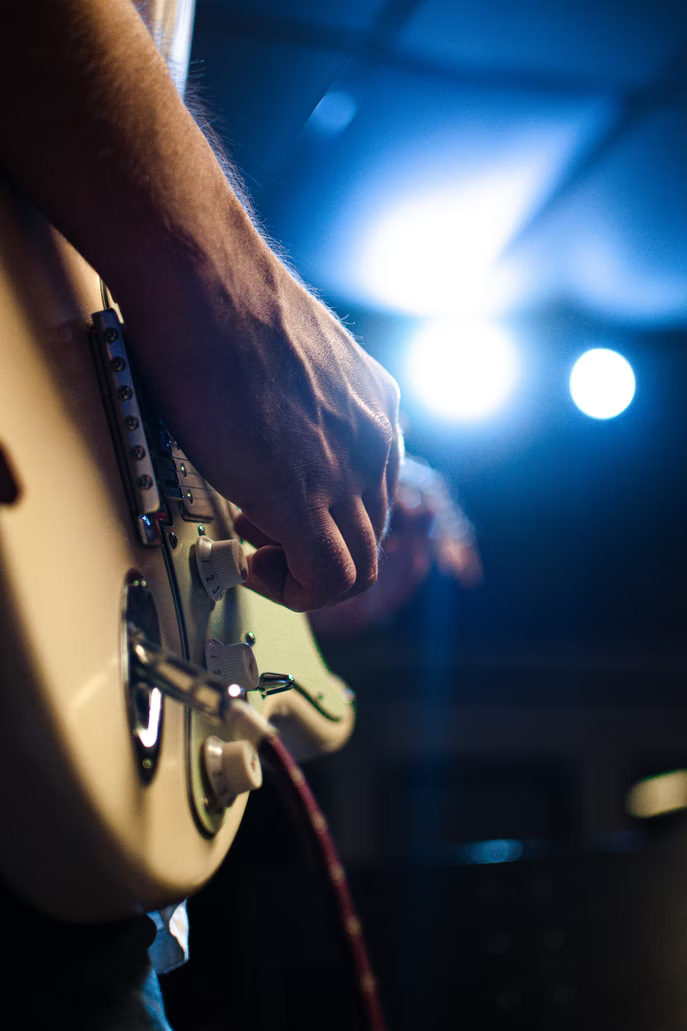
Guitar Heroes featured three guitarists/singers and a drummer. My husband was equally interested in stepping back in time. All the music was from our teenage era. A time when we were transitioning from child to adult with raging hormone changes. This 60’s rock was what we listened to in bed on a transistor, Radio Luxemburg frustratingly fading in and out. The same tunes we learned to jive, twist, and shake to at Youth Clubs, the Palais de Dance and the Il Rondo in Leicester.  

Our Saturday trip to the Loughborough market found us at the Town Hall reception desk enquiring after seat availability. We were not hopeful as my husband is six-feet-four inches tall and requires end of row seats. Two artificial kneecaps and a metal hip means he cannot squash into confined spaces.

The receptionist came up with a positive, yes, she had two end of row seats.  We gladly booked them and paid up – a bargain at £20 each.

This evening performance, we both agreed, would be worth making the effort of forfeiting the usual evening of Soaps and Quiz shows on TV. Our social time these days usually involves daytime dog walks with a cappuccino at a local beauty spot – all doors locked and bolted by 6pm.

We planned an early tea so that we could leave an hour before the 7.30pm start.  The dog began to sulk when he realised we were going out and he was not coming along - practically unknown.

We arrived in Loughborough before 7pm and the ‘Parking Fairies’ worked their magic. We bagged the space as close to the theatre as it was possible to get - Bunions and Hammer toes do not take kindly to evening shoes. Slightly ironic that the show we were heading for would have been the cause, as we danced the night away in four-inch stiletto’s and winkle pickers.

Amongst the first to enter the auditorium we were able to ‘people watch’ as folk arrived and took their seats. Our two seats were on the front row. Seats we would avoid like the plague had it been a comedian appearing. Right in front of us was a bank of massive speakers - was this the reason that the seats were still available at the 11th hour?

By 7.30pm the room was full to bursting. People had filed past us. Many with one or two walking sticks, crutches, push along Zimmer Frames. Some on mobility scooters, others just hanging onto the arm of a partner.

Bent backs, crooked legs and feet dominated the audience. An assortment of long-haired lads, obviously there aspiring to a professional guitar playing level, added some youth. The youngest, a little boy about eight years with long hair, smart tapered jeans, waistcoat, and black patent chukker boots – a real dude who will no doubt be part of a group at some stage.

The lady who sat next to me arrived with her mobiliator. She was very frail and could not let go of her support to pull down the flip-up seat. I held the seat down for her to land upon, straightening her long cardigan as she descended to prevent it ‘bunching up’.

Many with obvious disabilities had to ascend the stairs to their seat. It was done with difficulty, guts and determination and everyone made it to their seats for the start of the show.

Clothing was of all types. One elderly man with white pointed toe shoes and a leather jacket struggled with the aid of two sticks, refusing the lose his ‘rocker’ image.

Most of us elderly women wore flat comfortable shoes with orthotics that enabled us to walk at all. Gradually, the area front of stage became lined with folded walking aids and wheelchairs, stored out of the way until the time came to exit. Some could not transfer, remaining in wheelchairs/scooters, parked on the ends of the row.

As the music struck up, videos of the groups and artists were displayed on a screen. Handsome young men, Eddie Cochran, Buddy Holly, Jimmy Hendrix, Mark Bolan, their birth, and death dates displaying their tragically short lives. Remembered always for their young, good looks by an audience now wrinkled and grey.

It may have been a benefit that many of us were half deaf! Three quarters of the audience were over 70 years, re-living their youth. The legs and feet that had struggled to carry stooped bodies were swaying and tapping to the music. Memories of Jiving when limbs were like rubber and stamina was endless. When the ridiculous shoes became cumbersome, they were discarded next to handbags that we danced around barefoot.

Mouths formed every word of each song. Heads and shoulders swayed rhythmically as we were transported to a time when we were clueless to limb pain. Our digits and joints had yet to grow bent and swollen, fine movement taken for granted.

No money for a drink [back then], the cost of admission and the bus fare home was all that we could afford. If desperately thirsty we would scoop tap water in our hand to ‘wet our whistle’.  Our pelvic floors had yet to suffer the traumas of childbirth and excess weight.

The Disabled Toilet lay, surprisingly ‘vacant’. Most folk almost certainly aware of the words “better to be safe than sorry.” Standing in a queue is not an option for an ageing bladder.

Many people did not remove themselves to the bar during the interval, it was just an effort too far.  We were happy therefore to find that Ice-Cream is still served during the interval.  Gone are the days where the limitations were Vanilla or nothing. Like everything today, the tubs are considerably smaller. Eight flavours were on offer, a decision too far on the spur of the moment. Without specs it proved impossible to read the small writing and the nearest two were taken, just like mother insisted. Blackcurrant and clotted cream and triple chocolate chip went down very nicely. 

Far from the thrupenny cornet the ices were £3 each - £6 for two ice creams! That was two weeks wages when I started full-time work. When we eventually sussed out where the spoon was hidden (in the lid), it was too short to reach the bottom. Sticky fingers were therefore endured for the second half.

We were seated for three hours. Pressure sores could have formed in less time. Hopefully the movement prevented such a price being paid, the exhilaration keeping our circulation moving.

Exit from the auditorium was a re-run of difficulties, backs, legs and feet stiffened from sitting. Once up and moving, I suspect everyone left with a song in their heart and a wealth of happy memories.
Far from our halcyon days, the only ‘Jump’ that night was from the young Van Halen.

CW

Photo by Arthur Ogleznev 
on Unsplash.com


Fragments

On this day in 1982, a man broke into Buckingham Palace and found his way to the bedroom of the reigning monarch. Forty-four years later, I ...